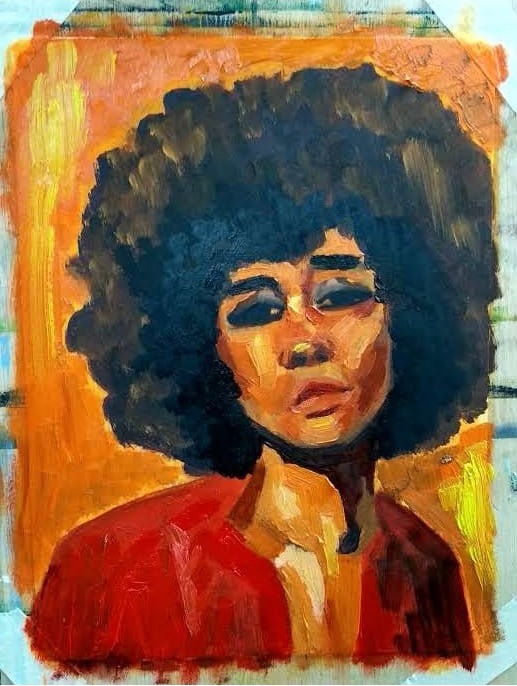
People sometimes ask how I can enjoy painting, cooking or carpentry while also working as a Data Scientist, as if those interests belonged to completely different worlds.
To me, they all come from the same place: I enjoy creating things.
What has always felt different about programming is the amount of friction involved. Painting, cooking or building something with wood usually feel directly connected to the act of creation itself. Software development often means spending enormous amounts of time dealing with tooling, compatibility issues, deployment pipelines and abstractions that exist mostly to support other abstractions.
Sometimes the actual idea is the smallest part of the process.
That is why AI-assisted coding feels so interesting to me. For the first time in a long while, building software can feel closer to sketching an idea than wrestling with infrastructure. Projects that once felt too time-consuming or technically exhausting suddenly become realistic to attempt.
I suspect many people in tech are quietly realizing something similar: a lot of us did not necessarily love programming itself as much as we loved the possibility of creating things through it.
At the same time, AI is creating a strange kind of disillusionment among programmers. Many people spent years treating technical skill as something rare and difficult to obtain, only to suddenly watch models generate in seconds things that once took months or years to learn. Even when the results are imperfect, the psychological effect is real. Skills that once felt highly specialized are starting to feel more ordinary and accessible.
For some people, that feels threatening, almost as if the meaning of their work is dissolving. But maybe what is disappearing is not creation itself, only part of the friction around it.
What I find especially interesting is that most other professions will still fundamentally remain themselves while using these tools. A doctor using AI is still a doctor. A filmmaker using generative tools is still making films. An artist remains an artist.
Maybe programming is moving in that direction too: becoming less of an identity and more of a medium for building things.
The uncomfortable question is whether we truly loved creating software, or whether we simply became attached to surviving the complexity around it. Maybe a lot of what we called expertise was actually years spent fighting dependency conflicts, debugging CI pipelines, formatting YAML files, reading obscure documentation and doing a kind of technical archaeology across layers of abstraction.
If AI reduces some of that friction, creation may become accessible to far more people. And maybe that is not the death of programming, but the first time software starts feeling closer to creation than maintenance.